
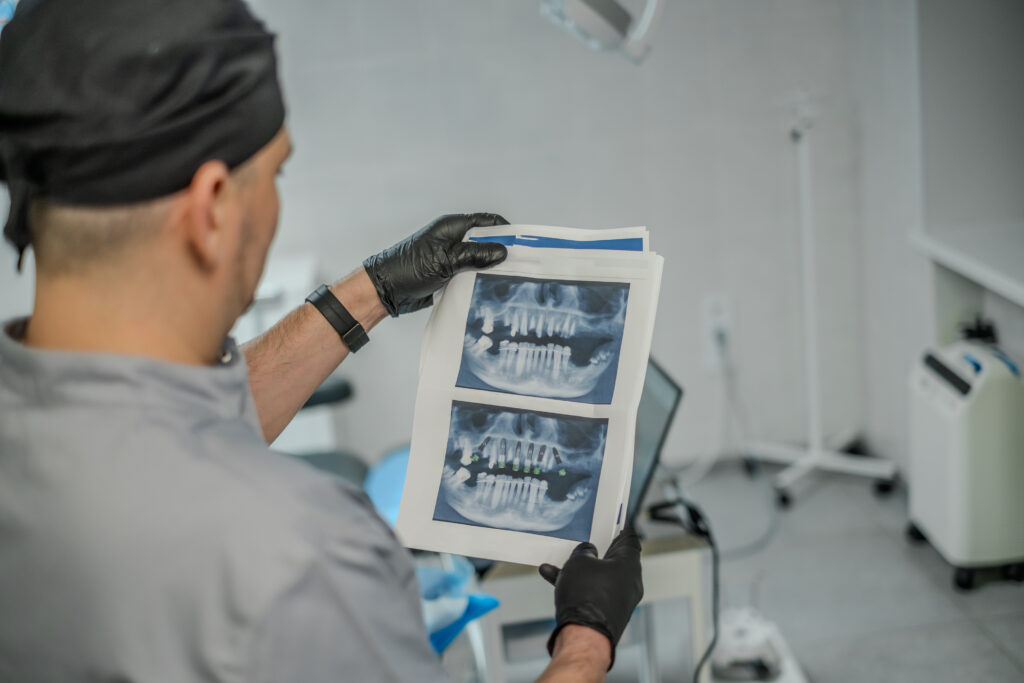
Some dental concerns can develop before they cause pain or visible changes. When clinically appropriate, X-rays provide information that cannot always be gathered through a visual examination alone. Your dentist determines whether images are needed based on your examination, oral health history, symptoms, age, and individual risk factors.
Decay in Hidden Areas
X-rays may help identify decay between teeth, below the gumline, or around existing fillings. These areas can be difficult to inspect directly, especially when there is no sensitivity or visible damage.
Changes in Teeth and Bone
Dental X-rays can show changes in the bone supporting the teeth, including bone loss associated with gum disease. They may also reveal concerns around tooth roots or within the surrounding jawbone. Any finding must be considered alongside a clinical examination before a diagnosis or treatment recommendation is made.
Developing or Impacted Teeth
Images can show teeth that have not emerged, including impacted wisdom teeth. For younger patients, they may also help assess the development and position of permanent teeth. Panoramic X-rays provide a broader view of the teeth and jaws and may assist with planning treatments such as extractions, dentures, or implants.
Dental X-rays are not automatically required at every appointment. Kemptville Smiles Dentistry uses digital and panoramic imaging when indicated. Contact the practice to schedule a dental assessment and learn whether X-rays are appropriate for your needs.