
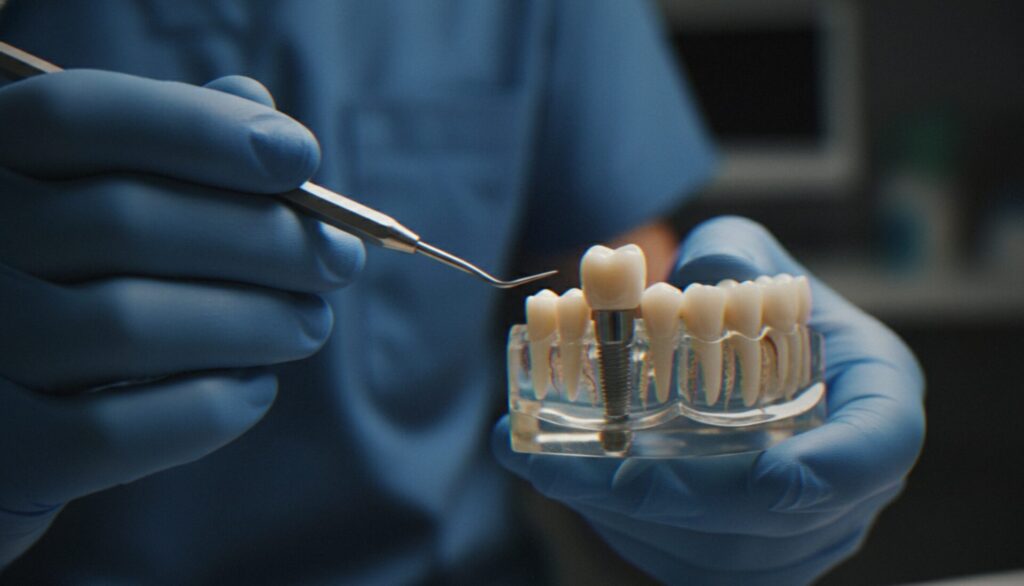
Replacing several missing teeth can involve more than one type of treatment. Traditional dentures remain a practical option for restoring a partial or complete smile, while dental implants provide another way to replace missing teeth by using support within the jawbone. Patients researching implant supported dentures in Kemptville may wonder whether these approaches can sometimes be combined to improve stability. Understanding the basic differences between dentures and dental implants is a useful place to start.
How Traditional Dentures Replace Missing Teeth
Dentures are removable restorations designed to replace several missing teeth or a complete arch. Partial dentures can fill spaces when some natural teeth remain, while full dentures replace all teeth in an upper or lower arch. Kemptville Smiles customizes dentures according to the patient’s mouth and bite, with adjustments used to improve fit and comfort as the patient adapts to wearing them.
How Dental Implants Are Different
A dental implant is placed within the jawbone to replace the root portion of a missing tooth. After the implant has healed and integrated with the surrounding bone, it can support a dental restoration above the gum line. Kemptville Smiles’ dental implant treatment begins with an assessment to determine whether there is appropriate bone and oral health for implant placement.

Why Some Patients Ask About Added Denture Stability
Removable dentures rely on their fit and the shape of the supporting tissues, so some patients may notice movement while speaking or eating. In suitable situations, dental implants can sometimes be considered as part of a treatment plan designed to provide additional support for a removable or fixed tooth-replacement restoration. Whether this type of approach is appropriate depends on bone availability, gum health, the number of missing teeth, bite forces, medical history, and the patient’s treatment goals.
The Jawbone Needs to Be Evaluated
Implant treatment requires enough healthy bone to support the implant. Bone volume can change after teeth are lost, particularly when a tooth has been missing for a long time. Imaging and a clinical examination help determine whether implant placement may be possible and whether additional preparation could be necessary before treatment proceeds.
Remaining Teeth Also Affect the Treatment Plan
Some patients considering dentures still have natural teeth, while others may have teeth that are too damaged to remain predictably in place. If a tooth cannot be restored, tooth extraction may need to be discussed before the final tooth-replacement plan is completed. The condition of any remaining natural teeth can also influence whether a partial denture, full denture, implant-based restoration, or another option makes sense.

Gum Health Matters Before and After Treatment
Healthy gums and good daily oral hygiene remain important whether a patient wears dentures or has dental implants. Regular dental hygiene appointments allow the dental team to monitor the gums, remaining teeth, restorations, and areas that can be difficult to clean. Patients with implants also need ongoing maintenance around the implant sites to help support their long-term health.
The Best Option Depends on More Than Stability
While stability is an important concern, treatment planning also considers comfort, cleaning requirements, available bone, healing, medical history, the number of missing teeth, and how the restoration will fit into the bite. A traditional denture may be appropriate for one patient, while another may want to discuss whether implants could play a role in their tooth-replacement plan.
Start With an Individual Assessment
There is no single replacement option that works for every patient with missing teeth. Kemptville Smiles welcomes new patients who want to understand their restorative options. If you are comparing dentures, dental implants, or ways to improve the stability of a tooth-replacement solution, book an appointment to have your oral health, jawbone, bite, and treatment goals assessed.